Exploring L-Carnitine Supplementation as Support for Children with Autism
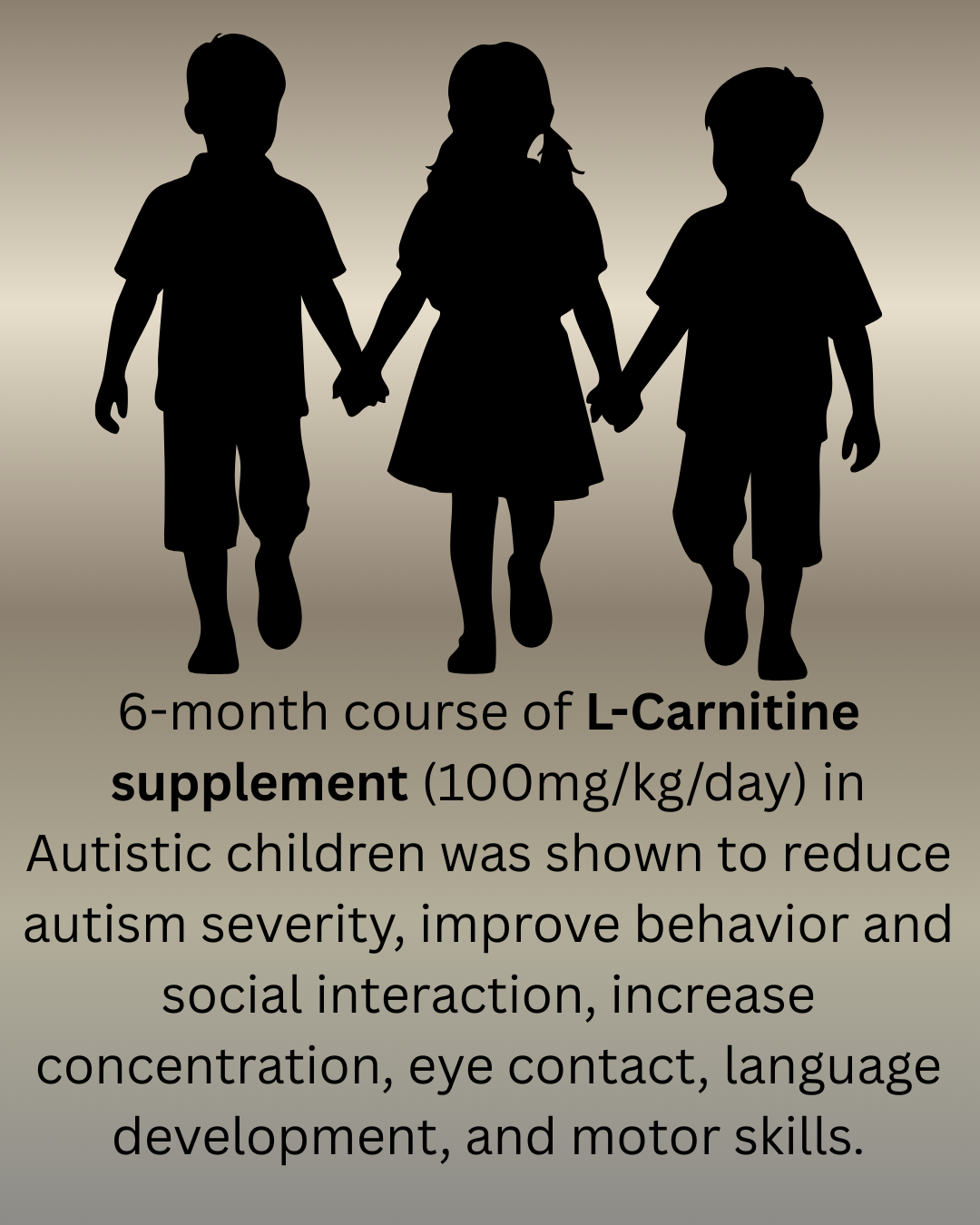
According to a randomized, double-blind, placebo-controlled clinical trial published in Elsevier journal Research in Autism Spectrum Disorders (2013), l-carnitine supplementation demonstrated a significant therapeutic benefit in children diagnosed with autism spectrum disorder (ASD). In this study, 30 autistic children received either oral l-carnitine at a dose of 100 mg/kg/day or placebo for six months. Clinical outcomes were assessed using the Childhood Autism Rating Scale (CARS), alongside biochemical evaluation of free and total carnitine levels. Results showed a statistically significant improvement in CARS scores over time in the l-carnitine group compared with placebo, indicating a reduction in autism severity. Additionally, free and total carnitine concentrations increased significantly in treated participants, supporting the biological efficacy of supplementation.
The study further reported that l-carnitine therapy was generally safe and well tolerated, with minimal adverse effects observed during the six-month intervention period. Although improvements in behavioral symptoms were evident, no significant correlation was found between baseline carnitine levels and the magnitude of clinical improvement, suggesting that response to treatment may not depend on initial biochemical status. The authors concluded that l-carnitine may serve as a beneficial adjunctive therapy in autism management, particularly due to its role in mitochondrial function and oxidative metabolism. However, they emphasized the need for larger, long-term studies to determine optimal dosing strategies and to better elucidate the underlying mechanisms through which l-carnitine influences neurodevelopmental outcomes in ASD