New mamas! lower post-partum depression risk with the following:
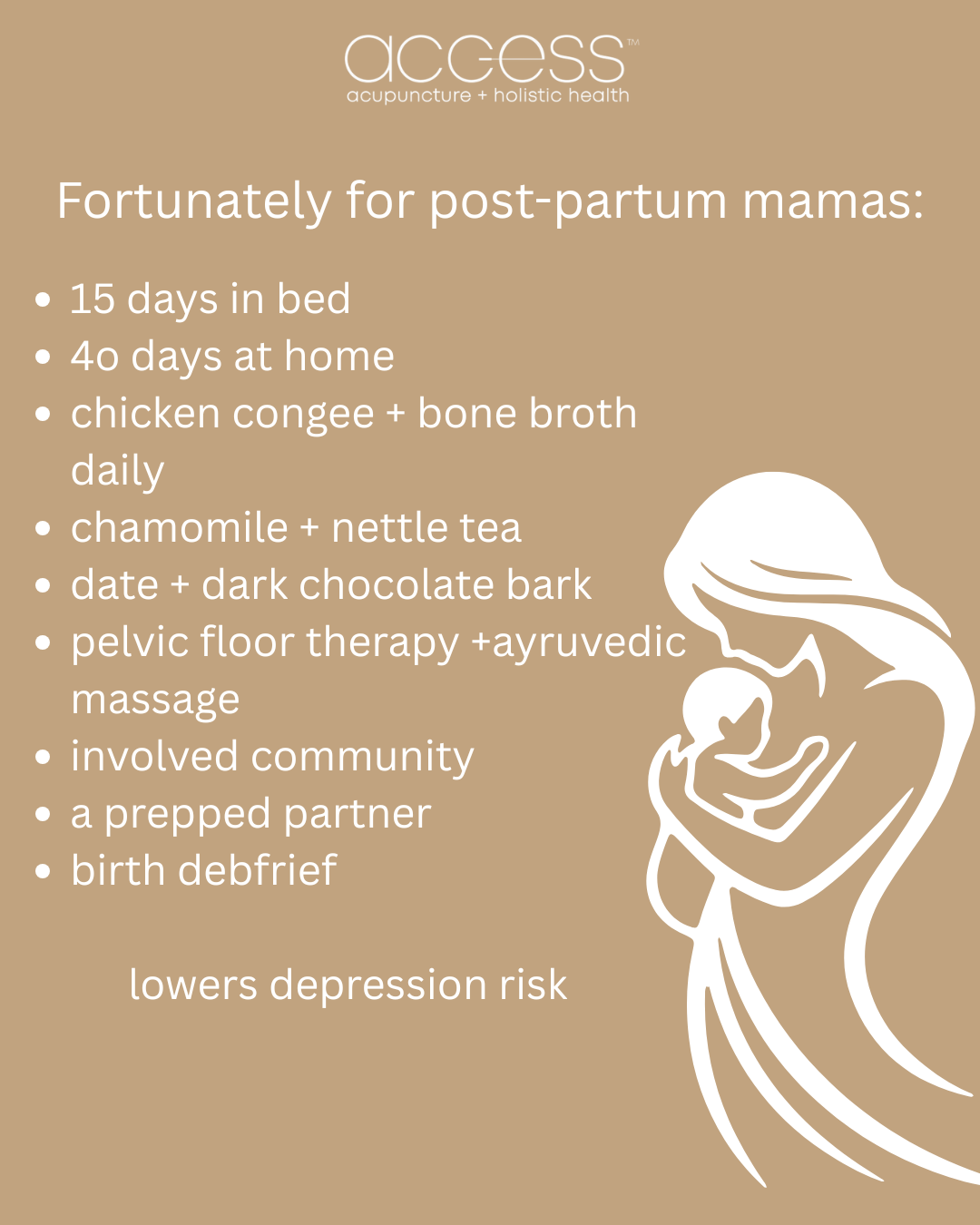
-15 days in, on, around bed
Deep restorative rest in the early weeks postpartum, helps regulate your nervous system, lower cortisol, and support healing. Gentle postpartum specific breath work + mobility.
-40 days at home
Fewer demands, less stimulation, more space to bond, recover, and stabilise hormonally.
-chicken congee + bone broth daily. rich in collagen, magnesium + calcium that support tissue repair. warm+easy to digest, they reduce strain on a compromised postpartum gut so nutrients are actually absorbed.
-chamomile + nettle tea. chamomile supports activity in the brain, helping calm the nervous system, improve sleep quality. nettle is iron-rich, helping replenish blood loss after birth — low iron is directly linked to fatigue and low mood.
-date + dark chocolate bark. dates provide glucose to support energy and prevent blood sugar crashes (which can trigger anxiety symptoms). dark chocolate adds magnesium, supporting serotonin and dopamine for mood regulation. Plus yummy!
-pelvic floor therapy + ayurvedic massage. pelvic floor therapy helps heal birth-related muscle and tissue strain, reducing pain, dysfunction, and long-term physical stress. loving touch through massage supports oxytocin release (bonding + safety hormone) and lowers cortisol, helping the nervous system settle down.
-an involved community
a supportive village of friends/family who listen, check in, actively help regularly reduces isolation and overwhelm(big risk factors for PPD) and promotes feeling of connection and being seen.
-a prepped partner
sharing the mental load, understanding the postpartum/matrescence transition. knowing the signs of PPD/PPA, when and who to contact in terms of support professionals.
-birth debriefing
your birth experience matters! processing it especially if it felt overwhelming or out of your control can prevent it from lingering in your body and impacting your mental health