
Ancient Chinese breathing technique to enhance memory
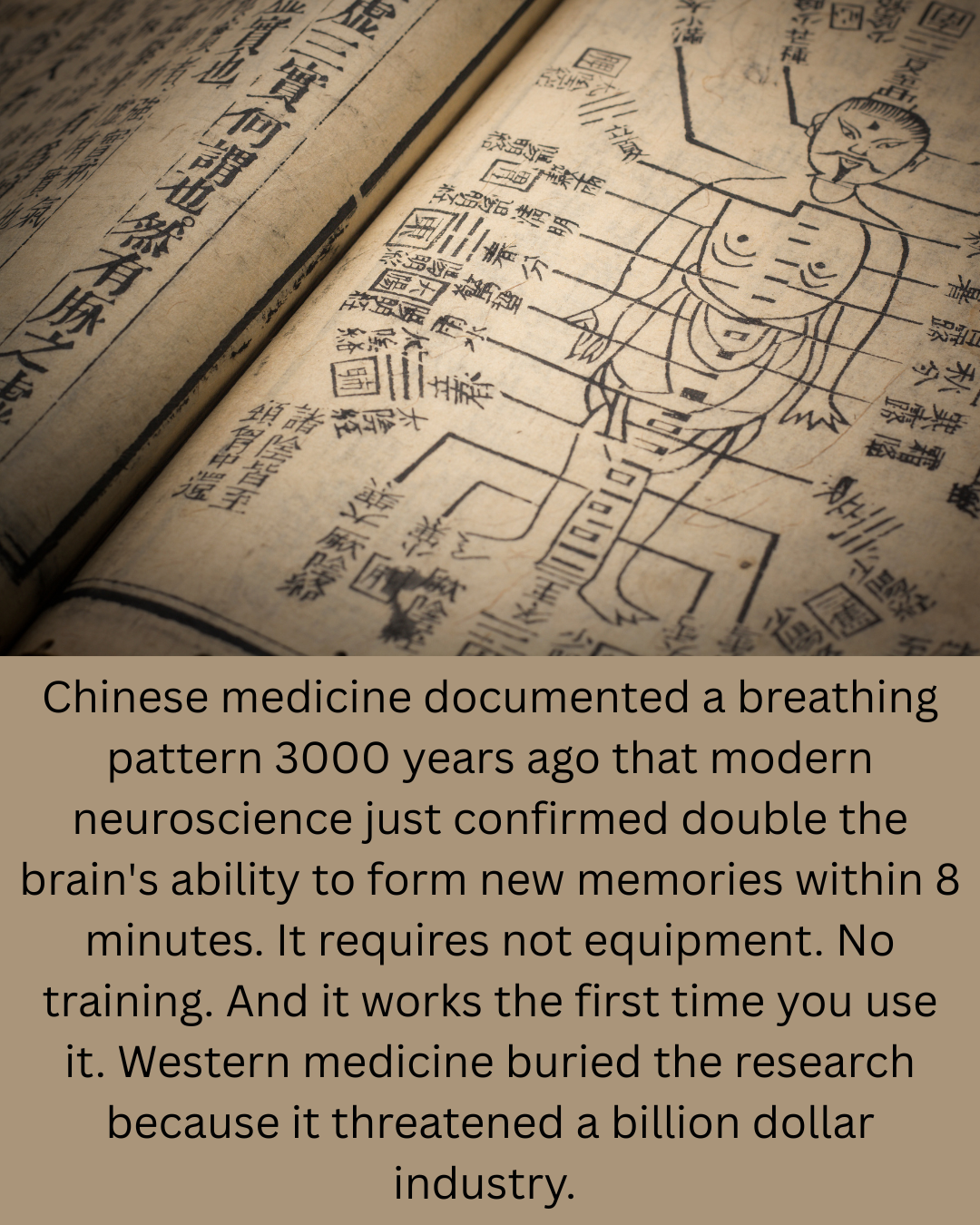
Three thousand years ago, Chinese physicians described a breathing pattern that shifted the mind into a state they called “receptive stillness” — a calm, focused state where learning and memory became sharper.
Modern neuroscience is beginning to explore what they may have observed through experience alone.
Research from Northwestern University found that nasal breathing can synchronize with areas of the brain tied to memory and emotional processing, including the hippocampus — the brain’s memory center.
One simple rhythm often associated with calming the nervous system:
5 counts in
2 count pause
5 counts out
2 count pause
Just a few minutes of intentional breathing before studying, reading, meditating, or learning something new may help improve focus, presence, and memory retention.
Ancient traditions called it receptive stillness.
Modern science studies it through brain waves and nervous system regulation.
Different language.
Same human body.
Breathe slower.
Learn deeper.