
What I wish patients knew about chronic pain

WHAT I WISH MORE PATIENTS KNEW ABOUT CHRONIC PAIN
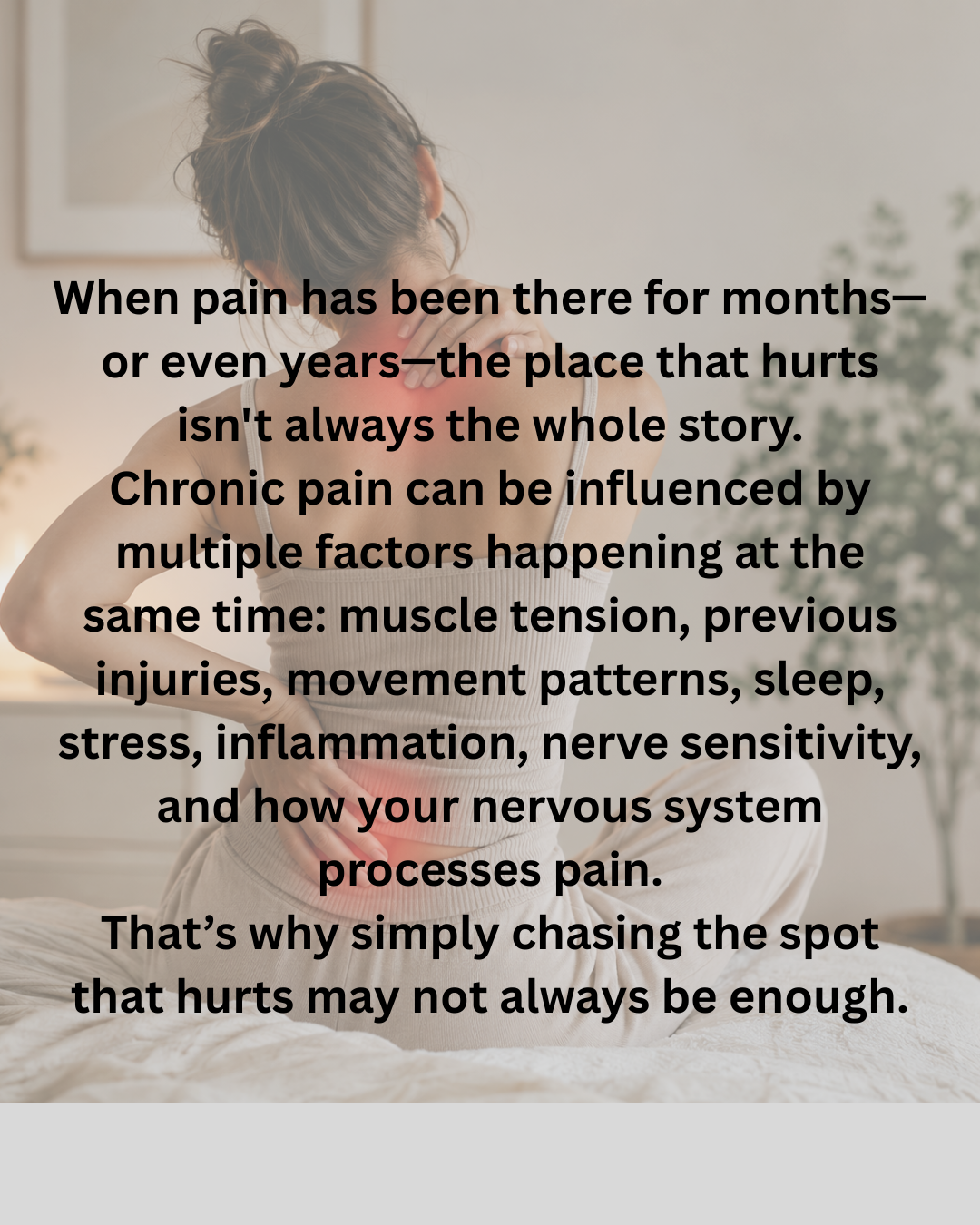
When pain has been there for months—or even years—the place that hurts isn't always the whole story.
Chronic pain can be influenced by multiple factors happening at the same time: muscle tension, previous injuries, movement patterns, sleep, stress, inflammation, nerve sensitivity, and how your nervous system processes pain.
That’s why simply chasing the spot that hurts may not always be enough.
Here’s what I wish more patients knew:
1. The painful area isn't always the source.
Your shoulder hurts—but could your neck, posture, repetitive movements, or surrounding muscles be contributing?
Your low back hurts—but what role are your hips, mobility, daily movement, or an old injury playing?
Sometimes we need to look beyond the exact location of the pain.
2. Your nervous system matters.
With persistent pain, the nervous system can become more sensitive to signals from the body. This doesn't mean the pain isn't real—it means chronic pain can involve more than tissue damage alone.
One goal of treatment may be helping calm that heightened response while also addressing the physical contributors to pain.
3. Stress can affect physical pain.
Have you ever noticed your neck tightening during a stressful week? Or an old injury suddenly bothering you when you're exhausted?
Stress can increase muscle tension, disrupt sleep, and influence how intensely we experience pain.
This is one reason acupuncture treatments often look beyond just the painful area.
4. Sleep is part of the pain conversation.
Pain can make it harder to sleep—and poor sleep can make pain feel worse.
It can become a frustrating cycle:
Pain → Poor Sleep → Increased Pain Sensitivity → More Pain
Supporting better rest can be an important part of a comprehensive pain-management plan.
5. One treatment may help, but chronic problems usually require a plan.
If something has been developing for years, we shouldn't necessarily expect the body to change overnight.
Treatment frequency and duration depend on the individual, the cause of the pain, how long it's been present, and what else may be contributing.
6. Our goal isn't just to chase symptoms.
When we treat chronic pain with acupuncture, we're asking:
Why does this area keep becoming irritated?
What patterns might be contributing?
What makes it better or worse?
How are you sleeping?
How much stress is your body carrying?
How are you moving throughout your day?
Because sometimes the better question isn't simply:
“Where does it hurt?”
It's:
“What is keeping it hurting?”
Acupuncture can be one part of a broader approach to chronic pain—alongside appropriate medical evaluation, movement, rehabilitation, sleep, nutrition, and other care when needed.